FOR CANADIAN RESIDENTS ONLY
ChangeAD
  • Understanding AD
    • Understanding AD
    • What is Atopic Dermatitis?
    • Understanding Triggers & Associated Conditions
    • Understanding the Symptoms
    • Scratching the Surface
  • Living with AD
    • Living with AD
    • Change the Effect of AD
  • Managing AD
    • Managing AD
    • Treatment Options
  • AD Community
  • Appointment Support
    • Appointment Support
    • Atopic Dermatitis Control Tool (ADCT)
    • Doctor Discussion Guide
  • Find a dermatologist
  • Français
  • ShareShare
  • FR

You’re not alone

If you’re living with AD, sometimes referred to as atopic eczema, you’re not on your own. In fact, it is estimated that as many as 1 in 10 adults worldwide have AD, making it one of the most common long-term conditions.

And while there’s no quick fix for AD, working with a dermatologist can help you to keep it under control.

Atopic Dermatitis Control Tool (ADCT)

Is your atopic dermatitis under control?

TAKE THE ADCT
Doctor Discussion Guide

Need tips for starting a discussion with your doctor?

Download  Email

WHAT IS ATOPIC DERMATITIS?

When you think about atopic dermatitis (AD), what probably comes to mind is the itchy, burning rash you can see. But there’s a bigger story going on beneath the skin.

AD, a chronic form of eczema, is more than a skin condition. It’s a disease caused in part by an overreaction of your body’s natural defense system.

Understanding what happens on the inside may help you be better prepared when discussing treatment options with your doctor that can help give you control over your AD. Watch the video to learn more.

Understanding triggers & associated conditions

The causes of AD are not fully understood. It is believed that a combination of your genetic predisposition and your environment contributes to the development of AD.

Flare-ups can be caused by triggers found in the environment. Everyone’s triggers are different, so it is important to notice what is happening around you when you are experiencing symptoms. Avoiding your triggers is a big part of managing your disease.

Emotional stress is a trigger for itching, and itching is in turn a cause of stress.

7 out of 10 people with AD have other family members who have AD or have other allergic diseases, such as allergic rhinitis (hay fever) and asthma. This means that some people have a genetic predisposition for the condition. There are certain gene mutations that are known to be major risk factors for developing AD.

The role of food allergies in particular is controversial. However, it is well known that AD and food allergies are co-associated. The most common food allergies are eggs, milk, peanuts, wheat, soy, tree nuts, shellfish and fish.

Your indoor and outdoor environments may be triggers for your symptoms. You may have one or more allergies to dust mites, pollens, molds, cigarette smoke, and pet dander. Extremely hot weather can cause you to sweat and extremely cold weather can lead to dry skin — both are triggers for itching.

Mutations in some genes related to the immune system are risk factors for developing AD, and the disease itself is partly caused by an immune system that is not functioning properly.

The number of people with AD has markedly increased in recent years, especially in urban areas. Living in an urban environment is a reported risk factor for developing AD, since air pollution caused by combustion of engines, industrial factories, and heating systems in buildings has been shown to cause allergic diseases like AD.

There is a link between asthma and AD. Some people with asthma will develop AD, and some people with AD will develop asthma.

The dander from animals is a known trigger for AD exacerbation.

Understanding the symptoms

Chronic eczema may be more than just a skin condition. It could be a disease called atopic dermatitis (AD).

The most common type of eczema is AD, a chronic disease. If you struggle with frequent flare-ups that just keep coming back, there may be a bigger story happening inside your body.

With AD, even when your skin looks clear, the inflammation may still be active under the surface and your next flare-up is just waiting to return. Some people always show signs of the disease.

The most obvious sign of AD is dry, itchy skin. Flare-ups are different for every person and can appear all over the body. Some other common external symptoms include:

  • Redness
  • Lesions that can ooze and crust
  • Swelling
  • Scaly areas
  • Thick skin

Scratching the surface

AD is an immunological disease, which means it involves the immune system.

With AD, your immune system is highly sensitive and can react to even the smallest allergens or irritants. This reaction can cause excess inflammation underneath your skin, which may lead to your frequent flare-ups. So those rashes you see on the surface are just the visible signs of a deeper inflammatory disease.

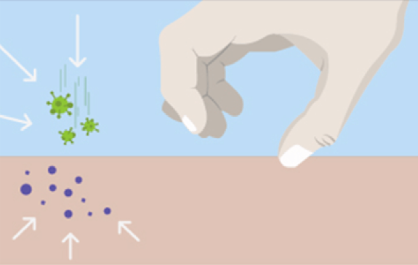
1. ITCH

Itchy rash on the skin with hand approaching to scratch

In people with AD, internal and external stimuli irritate the skin, causing nerve endings and immune cells to overreact. The resulting inflammation and intense urge to scratch has given AD the name “the itch that rashes”.

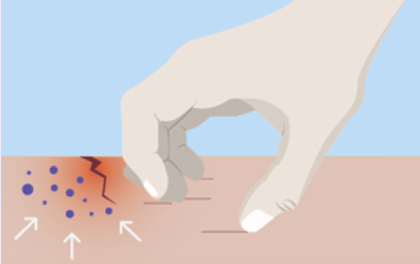
2. SCRATCH

Outer layer of skin cracking from the scratching

When you scratch, you can break down the outer layer of skin which allows bacteria, viruses and allergens to get in, leaving it prone to infection.

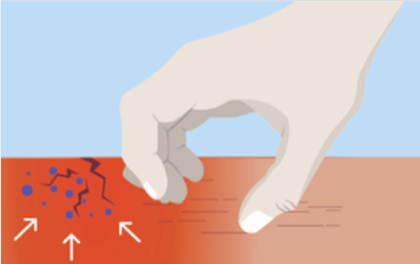
3. RELEASE OF INFLAMMATORY SIGNALS

More cracking and redness on the skin caused by scratching

In response to these invaders, your immune system continues to send signals to the surface, causing even more redness and itching.

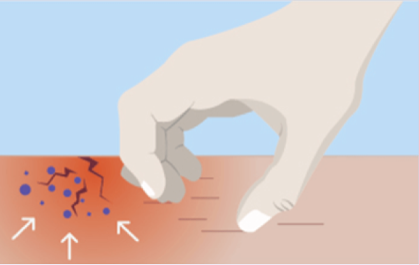
4. DAMAGED SKIN

Additional inflammation on the skin caused by continual scratching

The more you scratch, the more your skin barrier breaks down and the itch-scratch cycle continues.

Treatment Options Guide

There are many different treatments available to help control your AD. Keep this guide handy when you need a refresher or are reconsidering treatment options with your doctor.

Download

Atopic Dermatitis Control Tool (ADCT)

These six quick and simple questions can give your doctor an idea how atopic dermatitis is impacting your life.

Get started

Doctor Discussion Guide

You can make the most of your conversation with your doctor by preparing for your appointment ahead of time.

Learn more
  • SITE MAP
  • PRIVACY POLICY
  • TERMS OF USE
  • COOKIE POLICY
Accessibility: This website supports the dignity, independence, integration, and equal opportunity of people with disabilities and, as such, will comply with accessibility standards set out in the Accessibility for Ontarians with Disabilities Act, 2005 (AODA).
© 2025 sanofi-aventis Canada Inc. and Regeneron Pharmaceuticals, Inc. All rights reserved.
MAT-CA-2401492E-1.0 - 07/2025
Sanofi | REGENERON®
Reviewed by PAAB Member of Innovative Medicines Canada


Download transcript

You are now leaving changeAD.ca.

The content of the website you are visiting is not controlled by the changeAD.ca team. The link is being offered for your convenience and should not be viewed as an endorsement of the content, product or services offered here.

Stay on changeAD.ca

Continue to external website


BIENTÔT DISPONIBLE